17 February 2005 — The New Dark Age
 February 1st, 1800 Hrs. the Board Room of the Manchester Evening News and ten selected members of the public are here to ask the Prime Minister a question. Self-consciously they wait to pose the question, their carefully vetted anodyne questions for the prim Minister who is in town.
Top up fees, from a persistent bright schoolgirl, pensioner poverty, EU regulation, air pollution, the prospects of the Government introducing an expansion of nuclear power. All handled adroitly, with charm and great skill from the…er “straight kinda guy”.
Finally the Editor asks Peter Cartner, a builder, to raise his question about the indeterminate mortality of Iraqi civilians and the Coalition of the Willing’s illegal invaders uncurious concern, to enumerate the effects of their military devastation on the civilians of Iraq.
Effortlessly, the Dear Leader slips into compassionate gear, avoiding the directness of the question, and poses the now familiar, “if you ask me , am I sorry we got rid of Saddam, I am not” he demands firmly if not fiercely.
He launches into impassioned rhetoric about how Saddam gassed his own people, the disclosure of mass graves of hundreds of thousands.
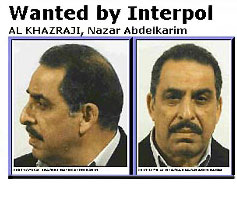
I stop him, impolitely but seizing the moment, in mid flow, to his evident but momentary discomfort. “Surely it is hypocritical to denounce Saddam when his Generals, such as Nizar al Khazraji, who was held under house arrest in Copenhagen on war crime charges, interviewed in September 2002 on the BBC Today programme as a potential post-Saddam Iraqi leader, then spirited from Denmark in March 2003 by the CIA, 3 days before the illegal invasion and is now helping the Coalition forces in Bagdhad”.
The thrust and the detail of this very pointed, unexpected and unwelcome question are of course lost on the invited public, the journalists. It is the end of a long hard day. The Prime Minister claims no knowledge of General al-Khazraji, his position with Saddam, nor of his working with the Coalition, but indicates that if I work through his staff who are present he will answer my queries.
Ultimately I do, detailing the roles in Saddam’s brutal repression over the years and the active participation of the bloodthirsty troika of General al – Khazraji and his old pals Wafiq Al-Samarrai ex-Head of Military Intelligence under Saddam, and General Najib Al-Salahi the man who led the suppression of the post-Gulf War uprising of the Shia is back there as well.
The PM’s reply
“You asked me about reports that General Nizar al-Khazraji, a known serious human rights abuser in Saddam Hussein’s Army, was now working with the Iraqi Government with the knowledge and support of the Multi-National Force.
“I was concerned to hear about these reports and asked for them to be investigated. It is clear that general al-Khazraji did indeed have an appalling record of human rights abuses in Iraq. For this reason, the Government’s only interest in General al-Khazraji is to see him brought to justice. We continue to support the efforts underway in Iraq to establish a fair and transparent system for prosecuting those suspected of human rights abuses under Saddam.
“The reports of General al-Khazraji’s association with the Iraqi Government appear to be the result of unfounded media speculation in the region. We have seen no evidence of any connection between General al-Khazraji and the Iraqi Government.
We have reason to believe that, far from working in support of the Iraqi Government, General Khazraji is actively engaged in opposing it.”
So there we have it, Tony Blair, PM, presumably expressing the views of his colleagues in the war cabinet is anxious to see General al-Khazraji “brought to Justice”.
It is not unreasonable to assume that this concern for dealing with other “serious human rights abusers under Saddam”, such as Khazraji’s military chums, Wafiq Al-Samarrai ex Head of Military Intelligence under Saddam and Najib Al-Salhi the man who led the suppression of the post Gulf War uprising of the Shia who are back in Baghdad are similarly brought to justice.
Careful examination of the letter does not suggest that Tony copied the letter either to George Bush, Mr Porter Goss at the CIA or General Abizaid.
…but then if it does turn out that those military intelligence people who had it so spot on about the WMD, have misled (”have reason to believe”) the JIC and the PM about the activities of General al – Khazraji and his old army pals, Wafiq Al-Samarrai. the ex ( and feared) Head of Military Intelligence under Saddam and Najib Al-Salhi the hammer of the Sh’ites …
Watch this space

 The New Dark Age
Leave a comment